Wednesday, March 19, 2014


Sunday, February 23, 2014
Gardening as a healthy hobby


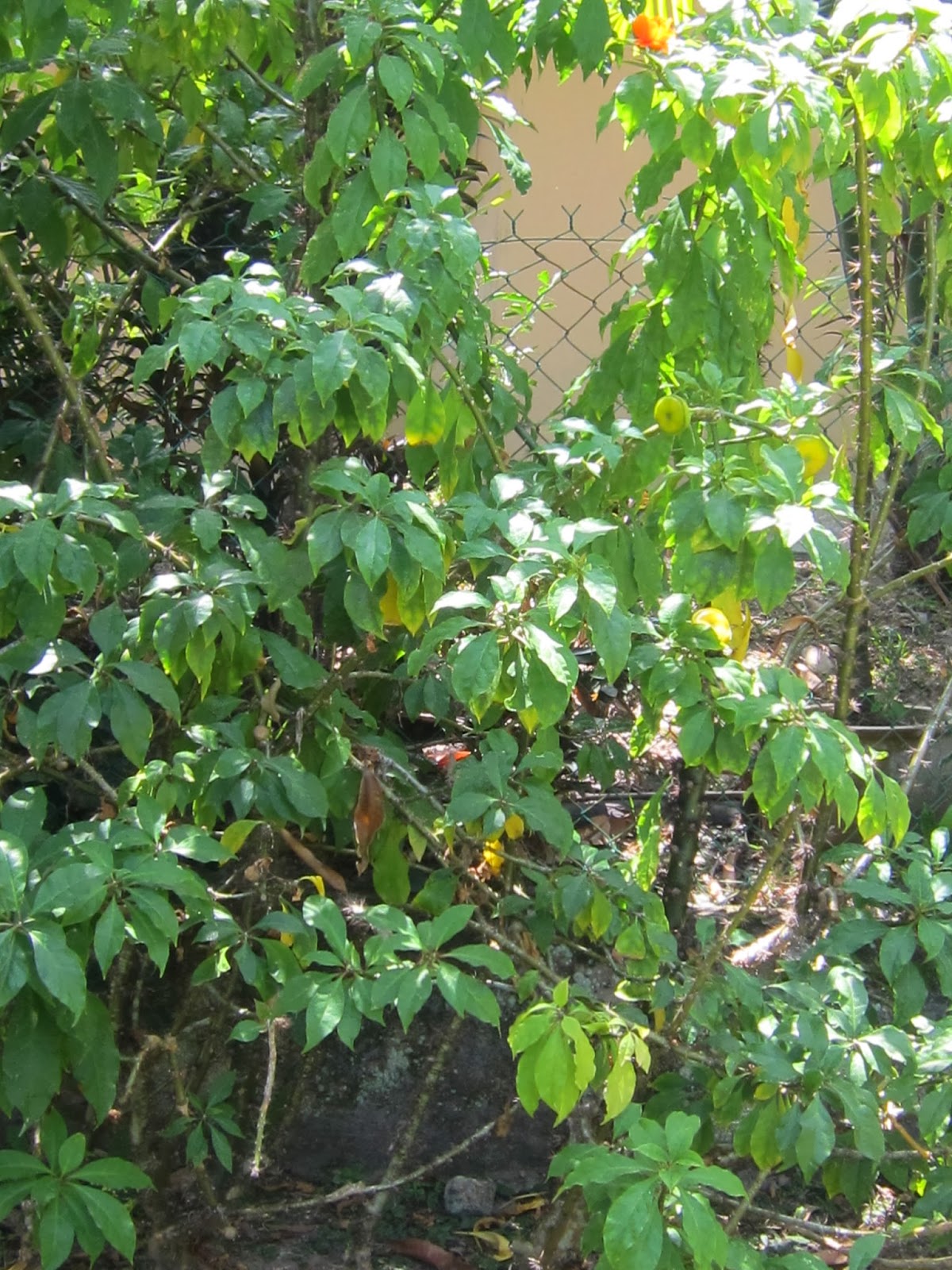

This article was prepared in response to the questions posed by a journalist of The Star on February 22, 2014, just a day before my 76th birthday. I have decided to post this on the blog as I feel readers will find useful tips as to the benefits and usefulness in establishing a home garden as a healthy hobby.
1. How long have I been growing vegetables in my garden?
The whole compound has an area of around 12 000 square feet, purchased in the late 1970s. The way the development was planned was to have a two-storey bungalow with plenty of space for the garden. . The house was completed in 1981 and the first gardening was concentrated in planting landscape plants and fruit trees. The garden was developed in stages. The main garden plants were the landscape species of bougainvilla (bunga kertas), royal palm, green shrubs and orchids. The fruit trees were rambutan and mangoes. At the back of the house I have allocated a big space which was raised up for vegetable cultivation. On completion of the house and the landscape planting, after staying in the house for a few years, I was transferred to Kota Kinabalu Sabah in 1989 to be the first Director-General of the Malaysian Cocoa Board. I returned and occupied the house in 2000 and since then I started devoting a little of my time to planting herbs and vegetables.
2. What are some of the items grown in the compound?
The herbs that are grown in my garden are: mengkudu (noni – Morinda citrifolia), tongkat ali (Eurycoma longifolia), lemongrass (both the cooking species – serai makan (Cymbopogon citratu) and serai Wangi (Cymbopgon nardus), kesum (Polygonum minus), beluntas (Pluchea indica), belimbing buluh (Averrhoa bilimbi), kaduk (Piper sarmentosum), bunga kantan (Etlingera elatior), sambung nyawa (Gynura procumbens), ulam raja (Cosmos caudatus), daun kari (Murraya koenigil), turmeric (Cucurma longa), lengkuas (Alpinia galanga), jarum bintang tujuh (Pereskia bleo), aloe vera (Aloe barbadensis), senduduk (Melastoma malabathricum), limau nipis (Citrus aurantifolia), limau purut (Citrus hystrix), inai (hanna – Lawsonia inermis), tenggek burung, pegaga (Indian pennywort), pecah beling, tebu hitam and Sabah snake-grass .
The vegetables types cultivated vary from time to time- currently I have spinach (bayam), kacang bende (lady's finger), sweet corn and cekur manis. At other times I have brinjal, sweet potato, tapioca, long bean. These are the vegetable types that I like to grow as I like to consume them.
3. Why the interest in herbs?
Malaysia’s biodiversity is rich with more than
1200 plant species known to have therapeutic values as these species contain
useful metabolites. I regard the herbs as natural health food and also
they can be used for medicinal and cosmetic purposes. They could be consumed as
juice, ulam or processed in various forms such as dried leaves, broth consumed
for medicinal purposes. Just as illustration, the therapeutic values of a few herbal
species grown in my garden:
a. Mengkudu - treating cutaneous diseases
such as boils, itches; good for arteriosclerosis, asthma, diabetes, rheumatism
and hepatitis; the fruit pulp can be processed into juice and taken as laxativeb. Lemongrass - remedy for flatulence, gastric and irregular bowel movement; its tea is said to be good against cancer
c. Belimbing buluh – known to be good for
cough, rectal inflammation; the poultice of its leaves is applied for itches, rheumatism and skin
eruptions. I usually dry the mature
fruits and use it in masak asam pedas Aceh, which is a regular dish in my house
d. Kaduk – juice squeezed from leaves is
used to treat malaria, coughs, flu and rheumatism. Young leaves are usually
taken as ulam
e. Turmeric (Kunyit) – is used to treat
cold, cancer, diabetes, kidney stones, stomach ache, diarrhoea and rheumatism
f.
Aloe
vera – treating wounds, skin diseases.
Its gel can be processed into juice and is considered effective in
immune stimulation, anticancer and antiviral.
The gel when applied to the face contributes to removal of wrinkles and
smoothen the skin
g. Sambung nyawa – taken as a cure to
migraines, constipation, hypertension, diabetes, kidney problem and cancer
h. Limau purut - used for beauty care such as hand lotion,
herbal bath to eliminate body odour. It
is also used as dandruff shampoo and to prevent premature greying.
4. What fascinates me most about gardening
and planting vegetables
Foremost in my consideration is that
gardening is a good exercise. One bends down, stretches and sweat profusely
whilst cultivating, tending the plants, manuring, pest control. It is a labour of love – love for living
things such as the herbs, the vegetables and the landscape ornamental
plants. One gets the most satisfaction
when one sees the crop growing and finally harvesting the crops
of one’s sweat. The first thing I do each before doing
anything is to have a glimpse of the plants I have planted. The green plants around you is also good for
the eyes. The other great thing is
getting the herbs of one’s choice fresh and not contaminated for your own
consumption. I start my breakfast with a
health drink – herbal or fruit juice which I formulate myself. The other thing is the ‘beauty’ value around
your environment that enhances the happy atmosphere around you.
5. Some people think that it is difficult to
plant vegetables. My thoughts on this.
In anything one does one has to have an
interest in it. Start with having a simple philosophy of one’s own – why
gardening? Health and getting fresh greens for one’s kitchen. This will
stimulate one to take the necessary action.
I have an advantage – the fact that my educational background is
agriculture. This does not have to
be. Once one is interested then one will
get the necessary exposure such as reading, learning from gardening friends to
get to know the growing of plants – from land preparation, getting and sowing
the seeds, weeding, manuring, watering, pest control. Once one gets started and see the results and
satisfaction of doing it, one gets addictive and wants to do it again and again.
6. What are some of the easiest vegetables to
plant in our climate?
I have not considered any undertaking like
growing vegetables as an easy task. This
also applies to the selection of types of vegetables. The more challenging thing in gardening and
growing vegetables is getting the land suitable for growing plants. The garden that I have right now was terraced
hilly land planted with rubber. There is
hardly any soil. It was covered with
hard rocks. It took considerable effort
in getting outside soil in and then adding organic matter to make it suitable
for planting herbs and vegetables. My
consideration as to types of vegetables
easy to grow takes into account the ease to care for it, problem of pest
and one’s choice of the vegetables for consumption. I like brinjal, it is easy to grow but I have
problem with a group of monkeys that prowl the secondary forest at the back of
the house as the young brinjal fruits is their favourite. The same is true with the tapioca where I
love to harvest the young shoot for ulam.
But the monkeys have been digging the tapioca for its roots even before
the tubers develop. Pegaga, my favourite
herb for juice and ulam is difficult to grow as snails just love them. Once they discover its existence they will
devour whatever plants around and before you know it the plants you have
painstakingly took the trouble to establish are gone. Lady’s finger is perfect as ease to grow.
Sweet potato and cekur manis are another. I have always been successful with
maize. However, for some reasons, I have failed in growing successfully
chillies and tomato – chillies will get the onslaught of viral disease and
tomato the fungal rot disease.
7. What are the benefits of planting your own
fruits and vegetables?
I have never considered financial gain as to
my involvement in gardening. The aestatical and exercise values far surpass the
monetary consideration.
8. How many hours do I spend tending my
plants?
Except for glimpses of the plants
particularly of those just planted and the watering and pest inspection which I
do daily, I spent around one hour looking around. However there are days when I spent two hours
in the morning and equally that long in the afternoon when I need to prepare
the land for new planting - removing the
weeds, tilling the soil, enriching the
soil with burnt soils and incorporating it, building beds, sowing and
mulching. In this dry weather i need to
water twice daily – once in the morning and once in the afternoon.
9. A few simple recipe of my herbal juices.
a. Mengkudu concentrates – take 3 fruits of
mengkudu, remove the skin, split it open and remove the seeds. Boil them with enough water just to cook
it. Mash it and then mix with one fruit
of mango. With sufficient water blend
the mixture in a blender. The mango is
to mask the offensive smell and taste of the mengkudu fruit. Keep the concentrate in the refrigerator.
Take an appropriate portion of the concentrate, dilute it to taste when taking
it.
b. Belimbing buluh – take 3 florescents with
young fruits and flowers, clean it.
Place it in a blender. Add half a green apple and sufficient water. Blend the mixture and dilute it to
taste. The drink is high in anti
oxidants and excellent for detoxifying the body.
c. Lemongrass
juice – take a lemongrass stem, clean it.
Cut it in small pieces and put in a cup. Add hot water and allow to
simmer for around 15 minutes and then drink it.d. Pegaga juice – take 3-4 runners of pegaga stem, leaves with roots and after cleaning, chop them into small pieces and place in the blender. Add half a fruit of green apple and water. Blend the mixture. The concentrate can be kept in the refrigerator and taken in portions, dilute to taste and drink.
Hashim bin Abdul
Wahab
23 February
2014
Tuesday, December 24, 2013
Forum on Biodiversity & Development Post 2015

The Forum was officiated by the Rt Hon the Prime Minister of Malaysia,
YAB Dato' Seri Mohd Najib bin Tun Abd. Razak

The Forum discussion was participated by representatives of the International Org

Participants at the Forum

The PM reminds us that the protection of our planet will ensure that we bequeath future generations a world worth inheriting

Exhibition of Models of Sustainable Development: SDSN Malaysian Chapter:
Sustainable Agriculture and Food Systems

Exhibition of Models of SD: Danum Valley Conservation Area
1. Introduction. The High Level Forum on Biodiversity &
Development Post 2015 was held from the 3rd to 6th
November, 2013 at the Royale Chulan Hotel, Kuala Lumpur, organised jointly by
the Office of the Science Advisor, Intergovernmental Platform on Biodiversity
and Ecosystem Services (IPBES), Malaysian Industry-Government Group for High
Technology (MIGHT) and supported by the Norwegian Environment Agency, United
Nations Environment Programme (UNEP) and the Ministry of Natural Resources
& Environment (NRE). The Forum, as
Professor Emeritus Dato’ Seri Dr Zakri Abdul Hamid, the key person in its
organisation, spelled out both in the programme booklet and his welcoming
remarks, was to provide the platform to discuss issues that can contribute
towards the formulation of the post 2015 global development agenda to ensure
that we move towards a sustainable model that would balance development with
the need to preserve and enhance our environment, taking recognisance of the
increasing interconnectedness of the world and the many challenges that it
faces which encompasses population explosion, social inequality, food security,
depletion of resources, loss of biodiversity,
waste management, glass house gas emission and climate change. As
sustainability becomes crucial, Sustainable Development Goals (SDG) is expected
to replace the Millennium Development Goals (MDG) as the post-2015 development
agenda. This International Forum was attended by representative of
international organisations such as FAO, IPBES Secretariat, UNESCO, UNEP, UNDP;
officials of the government ministries and departments, universities and NGOs.
2. Opening
Address. In his opening address, YAB
Dato’ Seri Mohd Najib bin Tun A. Razak, the Prime Minister of Malaysia,
reminded the audience that the Muslim faith taught that human beings are the
trustees of the world and with the many challenges facing it, we must pursue
sustainable development – development that is fair and equitable. Malaysia is committed to a 40 percent
reduction in the intensity of emissions per unit of gross domestic product by
2020, the undertaking given at the 2009 Copenhagen Climate Summit and
accordingly, has kept its green cover at 74 percent and that 56.4 of its land
area today is still forested and it will continue to strike a balance between
environmental conservation and development.
Dato’ Seri Najib indicated that the country’s economic model must have
the interest of the people and is guided by the principles of high income,
inclusiveness and sustainability. Recognising
that biodiversity provides the fundamental needs of mankind , he advocated the
sustainable use of resources and protection of biodiversity must be
incorporated into the post-2015 development framework. However, the success of sustainable efforts
requires the collective effort of the global communities to achieve the desired
goals.
3. Panel Discussion. The panel discussion, chaired by Sir Robert
Watson, former Chair of the Intergovernmental Panel on Climate Change (IPCC)
and Associate Director for Environment in the Office of the President of the
US, revolved around Integrating Biodiversity in Sustainable Development Goals
and members of the panel were made up of representatives of FAO, UNESCO, UNEP, UNDP and World
Bank. The speakers reiterated the
critical importance of biodiversity as it provides the needs of mankind such as
food security, medical treatments, ecosystem services and that it be the anchor
factor to be incorporated in SDG.
4. Informal
Consultation on IPBES & Capacity Building. This consultation took a
significant period of the Forum, which according to the programme was allocated
two days. I did not participate in this
consultation.
5. Exhibition. The exhibition, held outside the Forum hall,
entitled ‘Rising to the Challenge’, displayed the models of sustainable
development initiatives being undertaken in Malaysia covering:
a. Building Resilient Communities – the
model was on Life Cycle Disaster Management by Universiti Sains Malaysia.
b. Advancing Social Inclusiveness – Cure
& Care a holistic approach addressing drug addiction spearheaded by ISTIC.
c. Life Long Learning and Education – Teach
for Malaysia project with a mission to enhance quality of education in
Malaysia. Another activity under this
category is Inspiring Next Generation Scientists led by University of Malaya
and supported by MOSTI is aimed at generating interest and equip young
individuals with high quality scientific understanding.
d. Health for All – Affordable
Diagnostics project by Universiti Sains Malaysia in the development of rapid
antigen test kit to provide accurate disease diagnosis to eliminate Lymphatic
Filariasis. Another model is the Non-
Infectious Diseases project on Malaysia Cohort led by UKM and MOH.
e. Green Industries – The manufacturing
of green chemicals by MYBiomass Sdn Bhd initiated by MIGHT and the conversion
of plastic waste into renewable energy by Syngas Sdn Bhd are the two models
under this category of SD initiatives.
f. Sustainable Agriculture and Food
Security – Zero Waste Campus project of University of Malaya is conducted with
the objective of cutting down waste to the minimum through an integrated waste
management model. Also, the ‘White
Coffin’ project of USM in banning the use of polystyrene food containers on
campus and instead encourage use of eco-friendly packaging.
g.
Biodiversity and Ecosystem Services – Malaysian Lakes project initiated
by the Academy of Sciences Malaysia with National Hydrological Institute of
Malaysia which formulated the 8 strategies for the sustainable management and
development of lakes in the country. Also, the Langkawi Geopark, a holistic
approach to sustainable tourism.
i. Business with Soul – United
Plantations is recognised as the best managed, eco-friendly and integrated
plantation in the country. Another
business with soul project is Cess Money Systems whereby enterprises and
smallholders contribute a small part of their revenue to support promotion,
research, innovation and sustained growth of the industry.
6. Discussion
and Concluding Remarks. I am greatly
heartened by the organisation of this Forum.
Firstly, the person involved in it, Prof. Zakri, is a graduate of the same
College as I am, the College of Agriculture Malaysia and a friend. I am proud of the various appointments and
positions he holds both on the national and international arena – among them Science
Advisor to the Government; Chair of IPNES, and Special Advisor on Science to
the Secretary General of the UN.
Secondly, knowing that the Prime Minister, in his address, demonstrated
his commitment to a development that balances income with environmental
consideration. His presence at the Forum
was also testimony of his continued interest in science related activities and
support for his Science Advisor.
Thirdly, the Exhibition on Models of Sustainable Development initiatives
enhances my awareness of these activities, many of which I am not aware
of. I have always looked forward to
these sort of Fora and Conferences as these provide the latest information on
the subject besides keeping in touch with friends from various organisations
who attended these functions.
Written and Posted on 24 December, 2013.
Subscribe to:
Posts (Atom)